
Speaking
Practical ideas. Honest conversations. Safer, more capable workplaces.
Engaging, evidence-informed presentations that make complex workplace challenges easier to understand—and easier to act on.
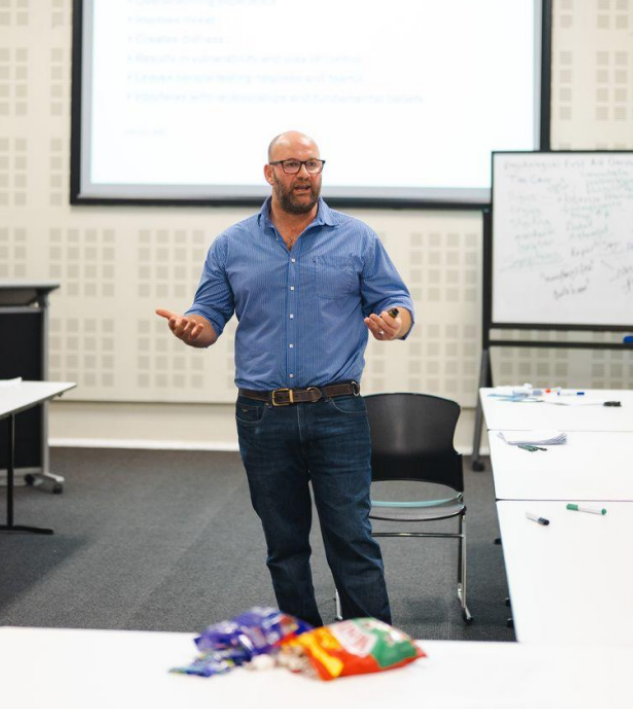
Meet Tim Carr
Tim Carr is a workplace capability consultant, facilitator, trainer and speaker with more than 15 years of experience supporting leaders, employees and organisations across regional NSW.
Known for his calm, practical and relatable approach, Tim makes complex workplace issues easier to understand, discuss and act upon. His presentations combine evidence-informed insights with real-world experience, helping audiences see workplace challenges from both leadership and frontline perspectives—and leave with ideas they can genuinely use.
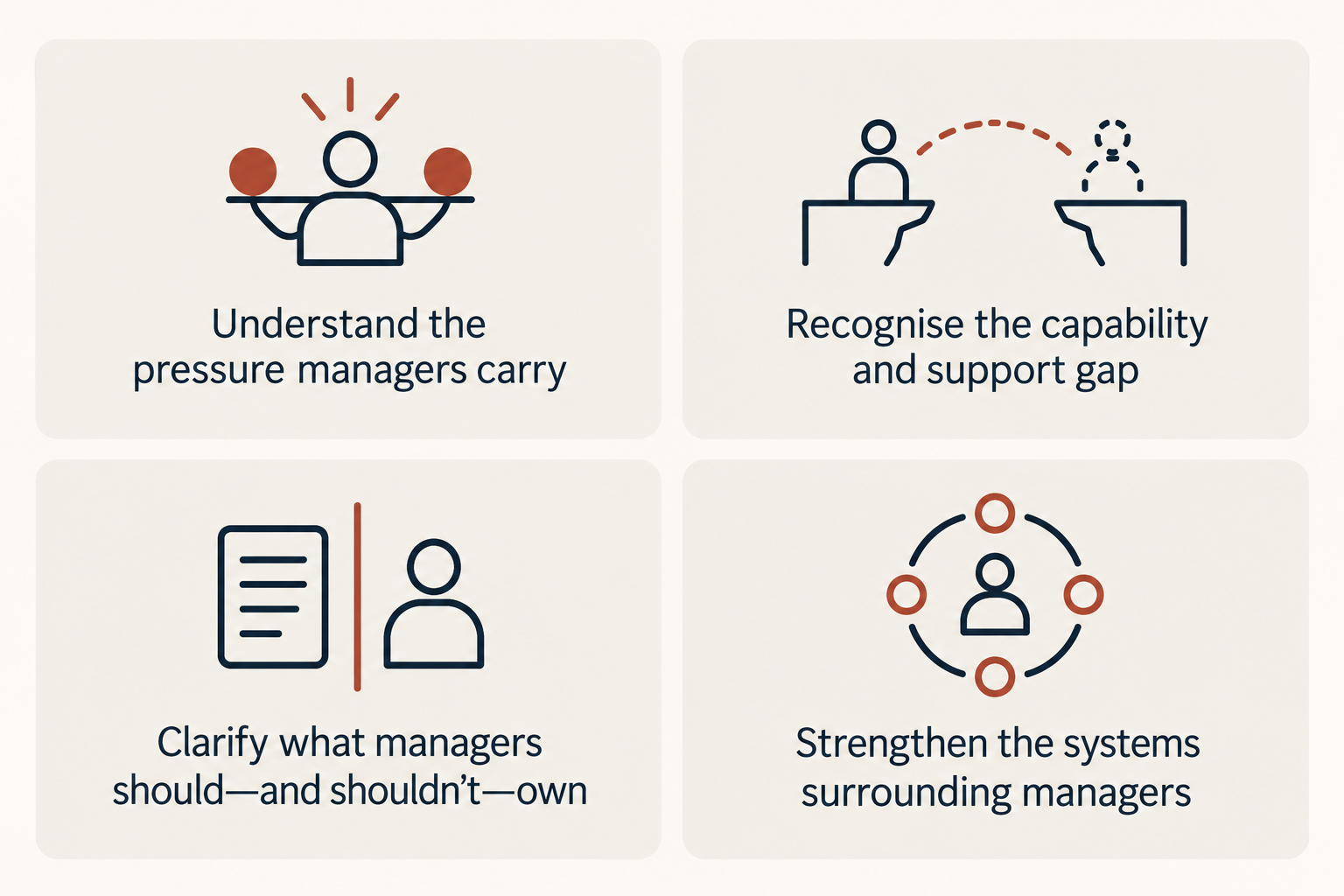
Frontline and middle managers are often expected to translate strategy, manage performance, support employee wellbeing, respond to workplace concerns and maintain day-to-day operations—all while navigating competing expectations from above and below.
They are frequently the first people employees turn to when something is wrong, yet many have not been adequately prepared or supported for the human complexity of their role.


Ideal for: Leadership conferences, HR and WHS forums, executive events and manager development programs.
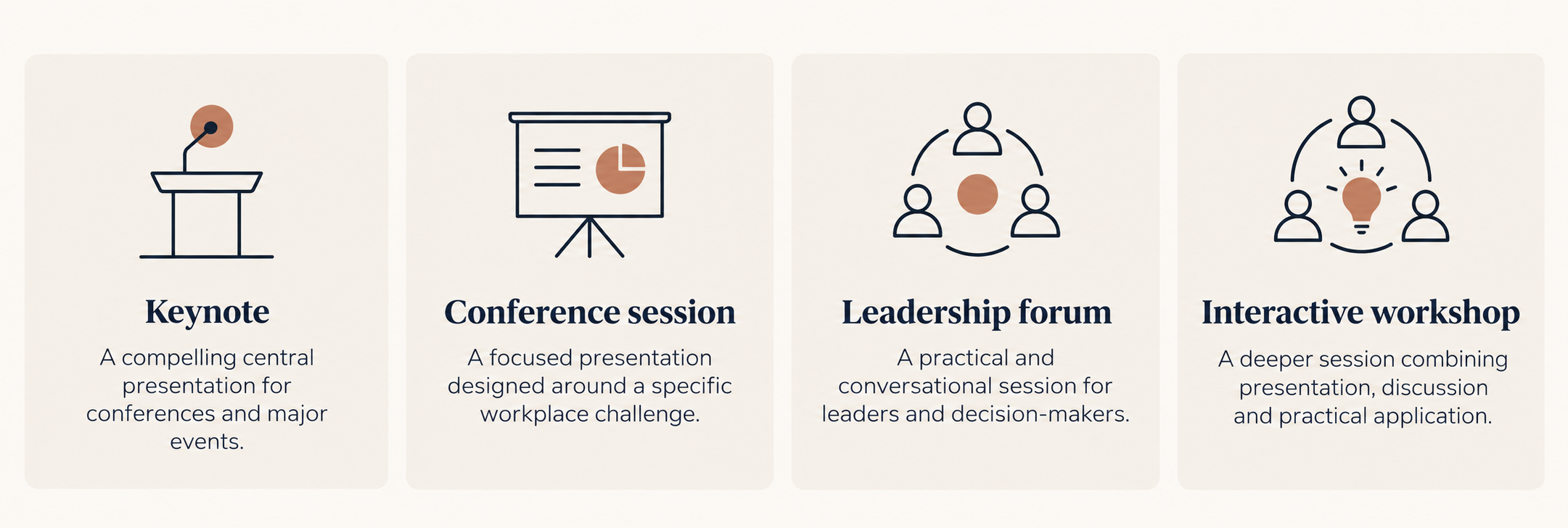
Available as: Keynote · Conference session · Leadership forum · Interactive workshop
Explore additional speaking topics
Presentations can be selected as standalone sessions or tailored to complement your event theme, audience and desired outcomes.
-
Turning consultation into meaningful workforce engagement
Consultation is not simply providing information, holding a meeting or asking whether anyone has questions. Meaningful consultation helps organisations understand how work is actually experienced and make better-informed decisions about safety, change and performance.
This presentation examines why employees sometimes disengage from consultation and what leaders can do to create more useful, honest and constructive conversations.
Audiences will explore:
The difference between communicating, consulting and genuinely engaging
Why workers may remain silent even when invited to contribute
How to ask questions that generate useful workplace insights
Ways to demonstrate that employee input has been heard and acted upon
Ideal for: Operational leaders, supervisors, project teams, safety professionals and organisations with frontline, mobile or geographically dispersed workforces.
-
Practical improvements that make a meaningful difference
Improving workplace safety and capability does not always require a major program or organisational transformation. Small, well-chosen changes to priorities, communication, workloads, role clarity and everyday management practices can significantly improve how work is experienced.
This presentation helps audiences look beyond surface-level symptoms, identify sources of unnecessary friction and choose practical improvements that are realistic to implement.
Audiences will explore:
How everyday work practices can create or reduce psychosocial risk
Why small workplace frustrations can become significant over time
How to identify changes within the organisation’s immediate control
Ways to turn good intentions into visible, sustainable action
Ideal for: Leaders, managers, supervisors, small and medium organisations, regional employers and teams looking for a practical place to begin.
-
Designing work that supports people and performance
Employee wellbeing cannot depend entirely on individuals becoming more resilient or learning to cope with poorly designed work. The way work is structured, managed and supported has a direct influence on employee health, engagement and organisational performance.
This presentation introduces the principles of good work design and demonstrates how thoughtful decisions about roles, demands, resources, communication and employee participation can support safer and more effective workplaces.
Audiences will explore:
The connection between work design, wellbeing and performance
How role clarity, support and manageable demands affect employees
Why involving workers can improve the quality of workplace decisions
Practical questions leaders can use when reviewing how work is designed
Ideal for: Executives, boards, senior leaders, HR and WHS professionals, change leaders and organisational decision-makers.
-
What happens next matters
Raising a workplace concern can feel risky. The way a manager responds in the first conversation can influence whether an employee feels heard, whether trust is maintained and whether important information continues to be shared.
This presentation explores what a constructive first response looks like. It helps leaders avoid common reactions such as becoming defensive, making premature promises, minimising the concern or trying to investigate the matter immediately.
Audiences will explore:
Why the first response can shape trust and reporting culture
How to listen without judging, dismissing or overpromising
The difference between receiving a concern and investigating it
Practical steps for responding, documenting and escalating appropriately
Ideal for: Leaders, managers, supervisors, HR teams, health and safety professionals and anyone who may receive workplace concerns.
-
Making a complex responsibility easier to understand
Psychosocial safety is often explained through technical language, compliance terminology and lengthy frameworks. This can leave leaders and workers uncertain about what it means, what is expected of them and where meaningful action should begin.
This presentation translates psychosocial safety into straightforward workplace language. Using practical examples, Tim helps audiences understand how the design, organisation and management of work can influence psychological and physical health.
Audiences will explore:
What psychosocial safety means in everyday workplace practice
Common psychosocial hazards and how they may appear
The difference between hazards, risks and control measures
Why prevention must address work design and systems—not only individual resilience
Ideal for: Executives, boards, managers, HR and WHS professionals, business owners, regional employers and organisations beginning their psychosocial-safety journey.
-
Building capability while addressing the conditions around it
Training is valuable when people need knowledge, skills or confidence. However, it cannot compensate for unclear responsibilities, conflicting priorities, excessive workloads, ineffective processes or systems that make the desired behaviour difficult.
This presentation challenges the assumption that every workplace problem is a training problem. It helps audiences distinguish between individual capability needs and wider organisational conditions that must also be addressed.
Audiences will explore:
How to distinguish a genuine capability gap from a systemic issue
Why employees may struggle to apply training in the workplace
The organisational conditions required for learning to translate into practice
How training, leadership support and system improvement can work together
Ideal for: Executives, senior leaders, HR and learning professionals, safety teams and managers responsible for workforce development or organisational improvement.
-
Creating clarity and trust when uncertainty is high
Organisational change can increase uncertainty, workload, role conflict and resistance—particularly when communication is inconsistent or employees feel decisions are being made without them.
This presentation explores the human experience of workplace change and the practical role leaders play in creating clarity, listening to concerns and maintaining trust. It helps leaders move beyond simply announcing change to actively supporting people through it.
Audiences will explore:
Why uncertainty can affect behaviour, wellbeing and performance
What employees need from leaders during periods of change
How honest communication can build trust without pretending every answer is known
Practical ways to involve employees and respond constructively to resistance
Ideal for: Executives, leadership teams, managers, supervisors, project leaders and organisations experiencing growth, restructuring or operational change.
-
Practical approaches shaped for regional workplaces
Regional organisations operate within a distinct environment. Smaller labour markets, dispersed teams, limited access to specialist support and close community relationships can create both valuable strengths and significant workforce challenges.
Drawing on extensive experience across regional NSW, Tim explores how organisations can develop capable leaders and teams without relying on solutions designed for large metropolitan workplaces.
Audiences will explore:
The workforce challenges and opportunities particular to regional organisations
How to develop capability when specialist resources are limited
The importance of practical, locally relevant leadership development
Ways to strengthen internal capability and reduce dependence on one-off interventions
Ideal for: Regional employers, local government, public-sector organisations, community services, industry associations and leaders responsible for geographically dispersed teams.
In-person across regional NSW and nationally · Online presentations available
A presentation shaped for your audience

Every event is different. Tim works with organisers to understand the audience, event theme and desired outcomes, then adapts the content and examples to make the presentation relevant.
Event organisers can expect:
A clear and responsive planning process
Content tailored to the audience and event objectives
Practical, evidence-informed insights
An engaging and relatable delivery style
Clear audience takeaways
Support with session descriptions and promotional copy